Ritual BPM (English)
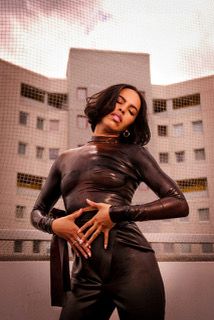
RITUAL BPM understands the practice of rave as a spiritual ritual in a West/Pan-African tradition and wants to make the origins of the culture visible again. The spiritual understanding of West African cultures was transformed by the international slave trade – the MAAFA – to the USA, parts of South America and the Caribbean. In the resulting cultures, spiritual rites are still practised today collectively and in connection with physicality, dance, music and ecstasy. Through physical exhaustion and dance exertion, Sophie Yukiko aims in RITUAL BPM to create a spiritual moment.
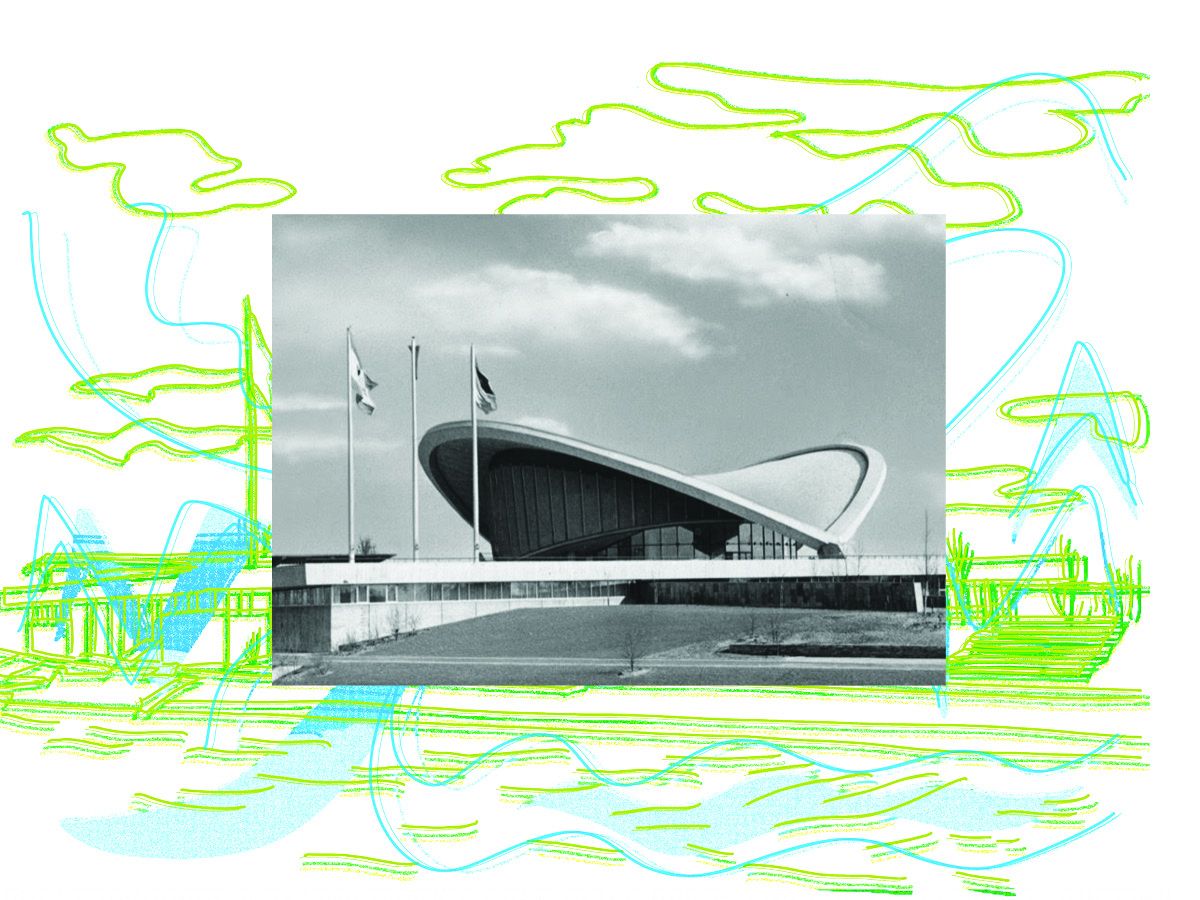
RITUAL BPM confronts the challenges of the spaces of the Haus der Kulturen der Welt (HKW), the former congress hall, which as a »beacon of freedom« should be visible from afar, also in the East, and propagate the ideals of US-American power; it addresses the apparent transparency and openness and attempts to counter the physical dominance of the prevailing material concrete with a movement: How can ritual intervene in the problematic modernist legacy that demonstrates the erasure of a colonial legacy? How can the practice of this West African ritual respond to a Eurocentric architecture?
Ritual BPM is part of the performance series Tracing Influence: Intervening in Western Cold War Architecture. The series is dedicated to four Cold War architectures in Berlin that bear witness to the institutionalization of US power in the promotion of educational institutions and the dissemination of knowledge. Various artists engage performatively with these architectural spaces and their site-specific histories to develop new forms of gathering that question the power dispositif of their past.
Tracing Influence was conceived by Kirsten Maar, Sophie Schultze-Allen, Hannah Strothmann and Luise Willer with the support of Mariama Diagne, Friederike Hartge, Martina Kutsch and Giulia Weis as part of the Collaborative Research Center (CRC) Intervening Arts at the FU Berlin, in cooperation with the Central State Library Berlin and the Haus der Kulturen der Welt (HKW) Berlin.